
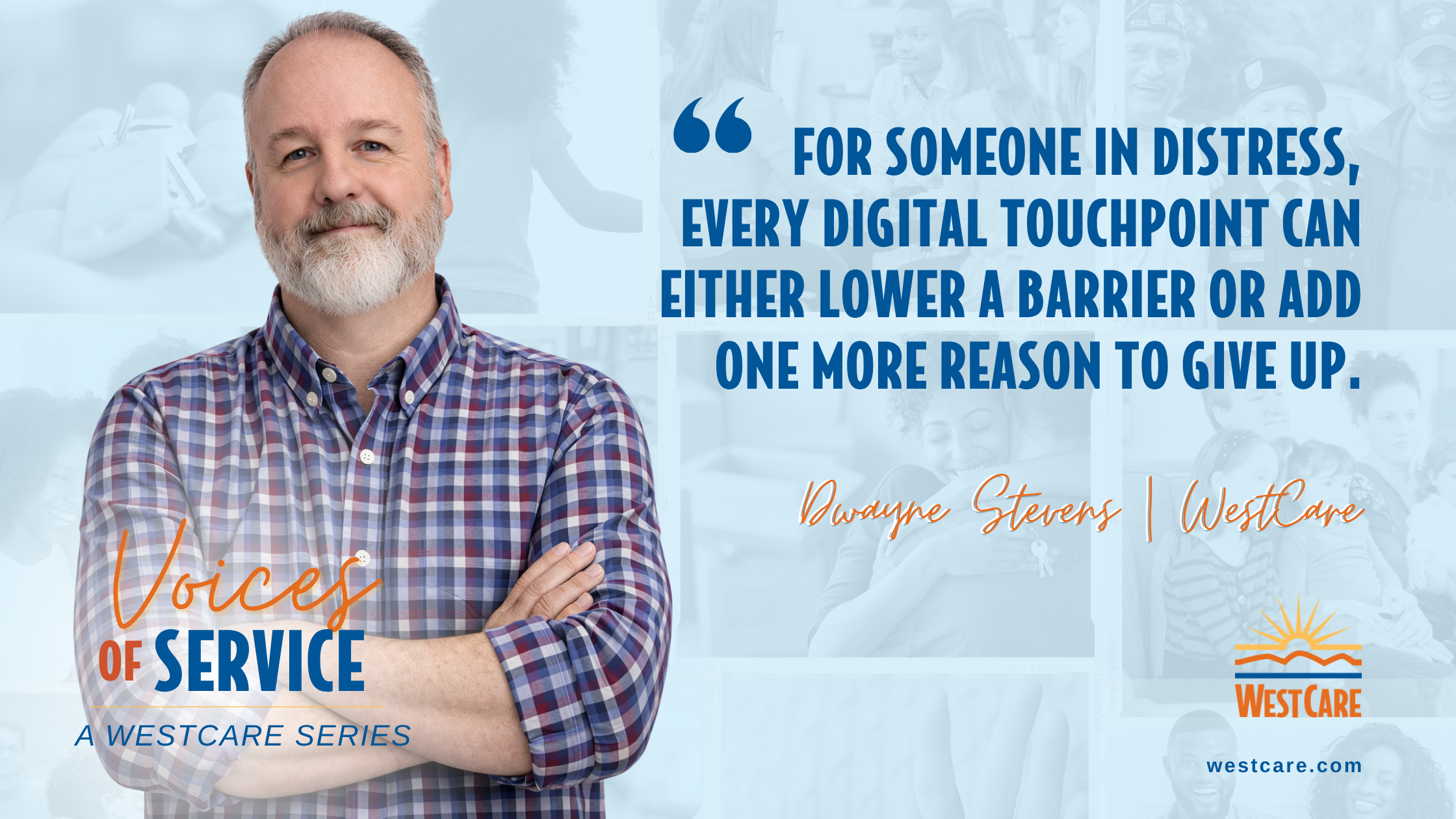
By Dwayne Stevens, Chief Information Officer, WestCare
People usually seek help when life already feels urgent: a worried parent looking for answers, a Veteran running out of options, or someone searching late at night for treatment, housing, crisis support, or a phone number that reaches a real person.
That is why technology in human services must be designed with care. The tools people encounter first—websites, phone systems, and social media—are more than communication channels. For someone in distress, every digital touchpoint can either lower a barrier or add one more reason to give up.
As Chief Information Officer, I spend much of my time focused on systems, security, data, and infrastructure. But the purpose of that work is deeply human: helping people understand what support exists, where to find it, and how to take the next step. That requires plain language, current program information, accessible websites, mobile-friendly pages, clear referral pathways, and respectful communication.
Privacy is part of that responsibility. People seeking behavioral health or human services need confidence that their information will be handled with care. When technology feels confusing, careless, or impersonal, trust can disappear quickly. Our work must protect sensitive information while still making access feel simple, respectful, and human. That balance is not always easy, but it is essential.
The digital front door matters most for people who already face obstacles to care. In rural communities, nearby providers may be limited. Families may be unsure which service fits their situation. Some people may be relying on a shared phone, an older device, or a public internet connection. Others may hesitate because they have felt judged before. If we design only for the easiest path, we risk missing the people who most need that path to be clear, welcoming, and reliable.
Good digital access does not replace human care; it helps people reach that care sooner. It makes it easier for a community partner to make a referral, for a family member to find the right number, and for staff to spend less time searching for information and more time serving people.
A broken link can become a missed opportunity, while a clear path can be the first step toward safety. In human services, technology is never separate from care. When used responsibly, it becomes one of the quiet but powerful ways we meet people where they are.

![Read more about the article National Coloring Day Coloring Pages [DOWNLOAD]](https://westcare.com/wp-content/uploads/2023/11/pexels-mentatdgt-1078744-300x200.jpg)