
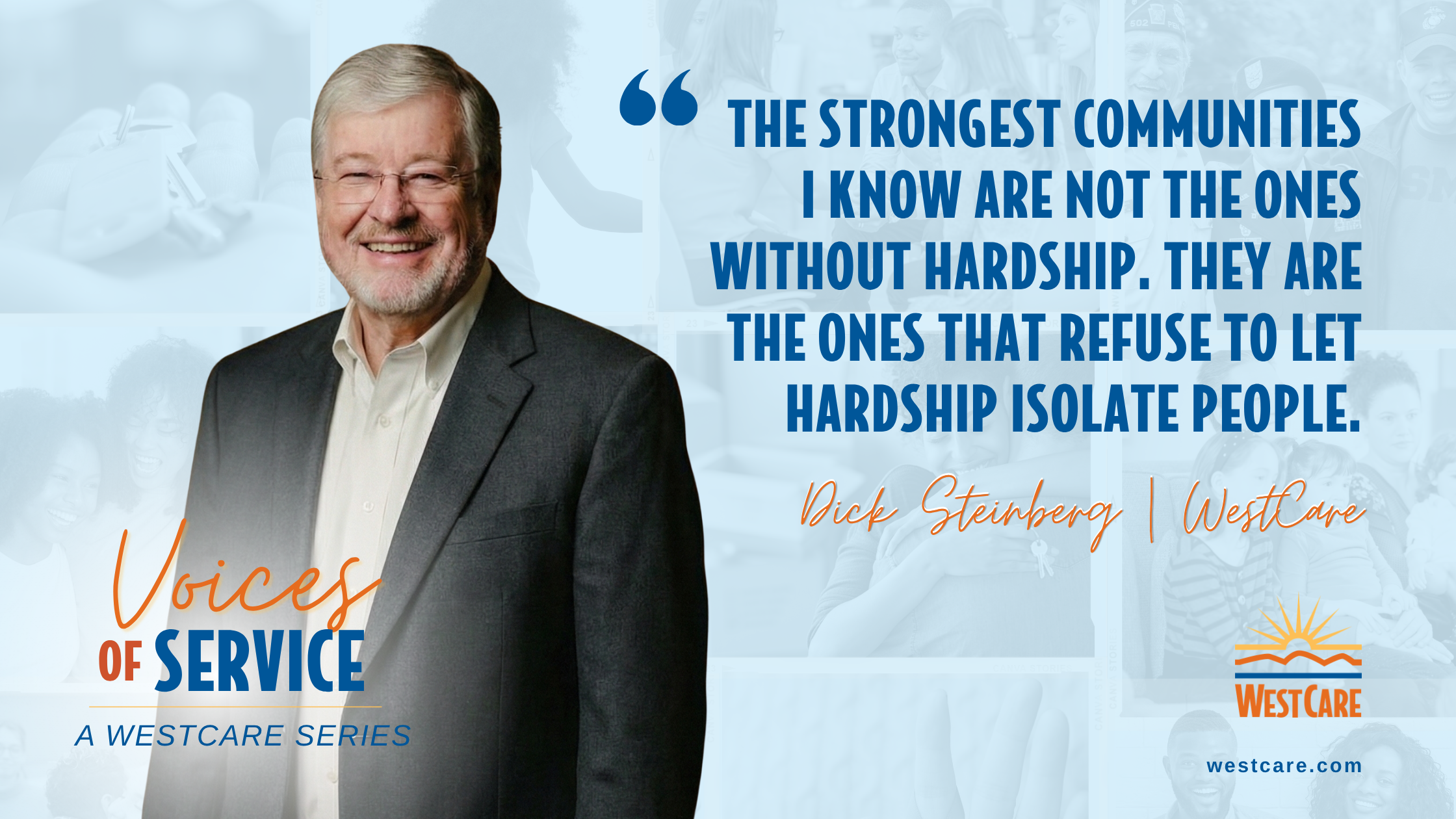
By Richard “Dick” Steinberg
Some of the most important work in human services happens in moments most people never see.
It is the first conversation after someone finally says, “I need help.” It is a staff member staying patient while a parent works through the fear of starting over. It is a Veteran realizing he does not have to carry the weight alone. It is a young person being told, maybe for the first time in a long time, that their future is not already decided.
I have been around WestCare long enough to know that programs matter. Funding matters. Licenses, contracts, facilities, and systems all matter. But none of those things work without a simple belief underneath them: people are worth the effort.
Community care still works because it is built close to real life. People do not come to us with one neat issue. A person may need treatment, but also a safe place to sleep. A family may need counseling, but also transportation, food, or help navigating the court system. A young person may need prevention education, but also adults who notice them before they drift into danger. Good care does not ask people to separate their lives into boxes before they can be helped.
That is why WestCare’s work has always depended on partnership. We need public agencies, courts, schools, hospitals, faith communities, donors, volunteers, employers, and neighbors. No one organization can carry the whole weight of substance use, mental health needs, homelessness, violence, trauma, and reentry. But communities can do extraordinary things when they stop treating those issues as someone else’s problem.
I also believe we have to talk about this work with honesty. Recovery is not always simple. Healing can take longer than anyone wants. People can make progress and still have hard days. Families can love someone deeply and still be exhausted. When we tell the truth, we reduce shame. When we reduce shame, people are more likely to ask for help sooner.
The people we serve are not case numbers. They are parents, sons, daughters, neighbors, coworkers, and friends. Many of them are doing the hardest work of their lives. Our job is to meet that work with dignity, patience, and practical support.
People believe in people. That is not a slogan to me. It is the reason a community opens another door when someone has run out of doors. It is the reason this work still matters.
![Read more about the article National Coloring Day Coloring Pages [DOWNLOAD]](https://westcare.com/wp-content/uploads/2023/11/pexels-mentatdgt-1078744-300x200.jpg)