
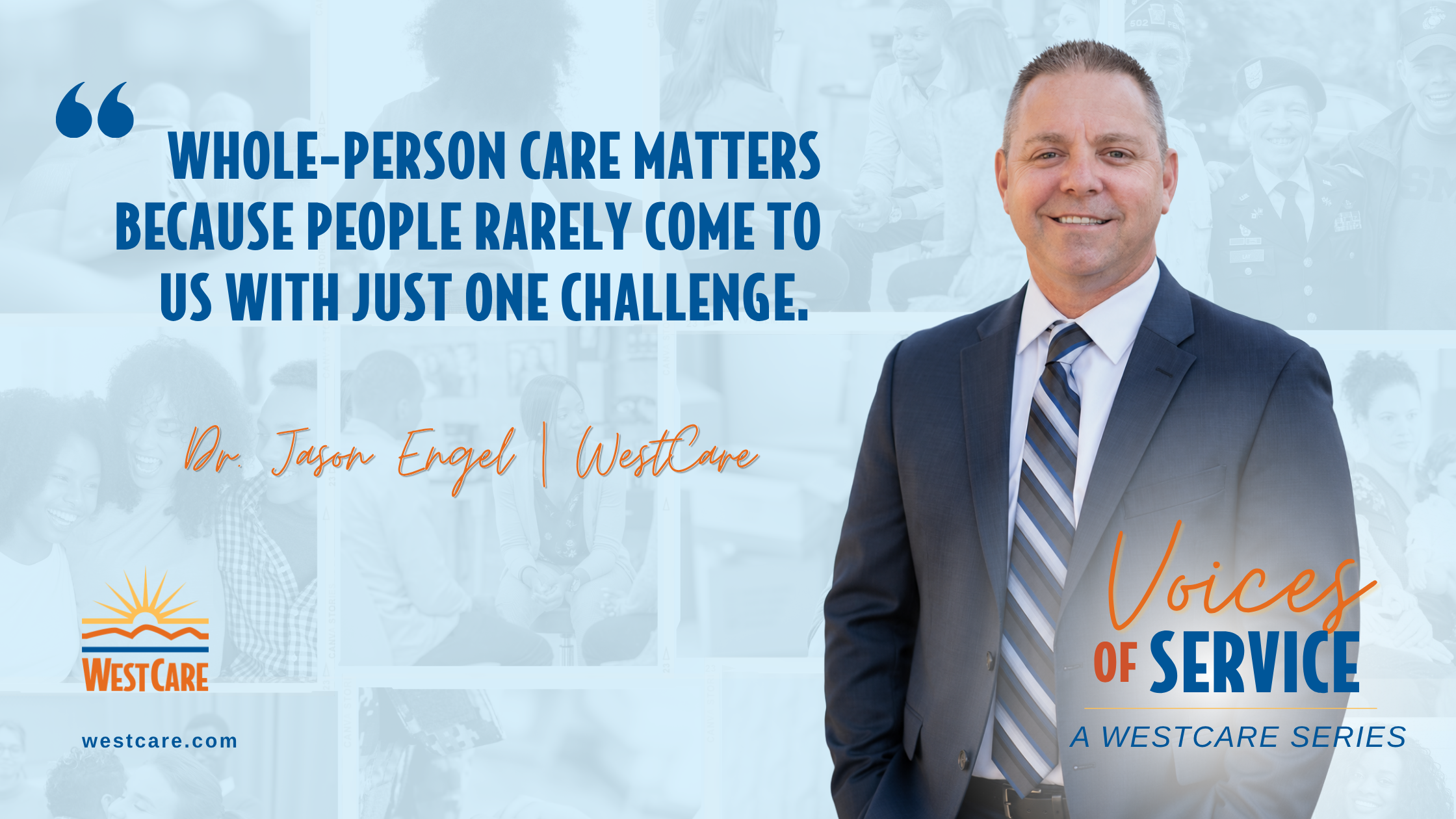
By Jason Engel
Chief Clinical Officer, WestCare
People rarely describe exceptional care using clinical terminology. Instead, they remember how they were treated. They remember whether someone listened. Whether they felt safe. Whether they were treated with dignity. Whether someone believed in them when they struggled to believe in themselves. And whether they left with hope and a clear understanding of what came next.
Those experiences may sound simple, but from a clinical perspective, they tell us a great deal. They reflect whether care was respectful, communication was clear, the environment felt safe, and the person experienced trust during one of the most vulnerable moments of their life.
As Chief Clinical Officer, I care deeply about clinical excellence. Evidence-based practices, accreditation, regulatory compliance, clinical supervision, documentation, quality improvement, and meaningful outcomes are not simply administrative requirements—they are the systems that help ensure every individual receives safe, ethical, and effective care regardless of where they enter our organization. These standards provide consistency across diverse programs and communities while creating the foundation for compassionate, high-quality services.
But quality cannot be measured solely by whether a service was delivered. We must ask a more important question: What changed because that person came to us for help?
Did symptoms improve? Did the individual remain engaged in treatment? Were avoidable crises prevented? Did housing become more stable? Did family relationships strengthen? Did employment or educational opportunities improve? Did the person feel more empowered to continue their recovery after leaving our care?
Those are the outcomes that truly define success.
Whole-person care matters because people rarely come to us with just one challenge. Mental health conditions, substance use disorders, trauma, housing instability, justice involvement, unemployment, domestic violence, physical health concerns, and family stress often intersect in ways that cannot be separated. If we focus only on the issue listed on the referral, we risk overlooking the underlying barriers preventing long-term recovery.
Effective care recognizes that recovery is influenced by medical, behavioral, psychological, social, and environmental factors. Addressing these needs together creates stronger outcomes, improves long-term stability, and helps individuals build healthier, more independent lives.
Good care should feel respectful. It should be structured while preserving dignity. It should be compassionate without sacrificing accountability. It should protect privacy, promote safety, and empower individuals to make informed decisions about their care. It should recognize that recovery is rarely a straight line and that meaningful progress is often built through small, consistent steps.
Quality also depends on supporting the professionals who provide care. Clinical supervision, ongoing professional development, interdisciplinary collaboration, and a culture of continuous learning equip staff to make sound decisions in complex situations. When we invest in our workforce, we strengthen our organization and improve outcomes for every person we serve.
There is no shortcut to quality. It is built through thousands of intentional decisions every day—how we answer the phone, document care, respond during crises, collaborate with community partners, measure outcomes, learn from data, and continuously improve our practice.
At WestCare, quality is not simply a performance metric or an accreditation standard. It is a commitment to ensuring every individual who walks through our doors receives care that is compassionate, evidence-based, accountable, and worthy of the trust they place in us.
Because in the end, good care should not just look right on paper.
It should feel right for the person who needed it.

![Read more about the article National Coloring Day Coloring Pages [DOWNLOAD]](https://westcare.com/wp-content/uploads/2023/11/pexels-mentatdgt-1078744-300x200.jpg)