
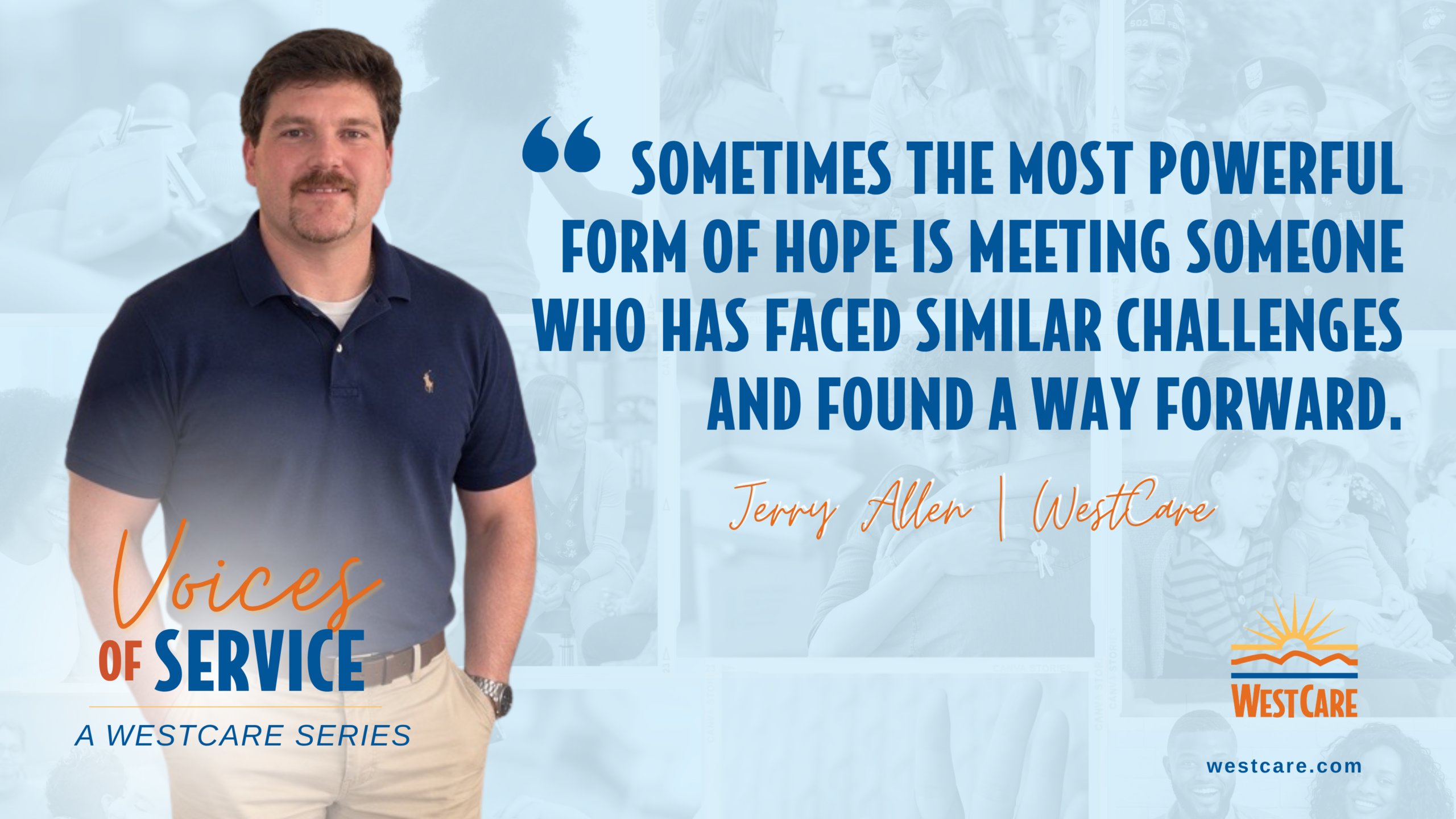
By Jerry Allen, Operations Manager, WestCare Kentucky
There is a kind of hope that sounds good in a brochure, and there is a kind of hope that sits across from you and says, I have been where you are. Peer support belongs in the second category.
For someone in early recovery, coming home from jail, trying to stay housed, managing mental health symptoms, or rebuilding family relationships, advice from professionals matters. Clinical care matters. Case management matters. But there is something powerful about speaking with a person who has lived through struggle and found a way forward.
Peer support does not replace treatment. It strengthens it.
A peer specialist can often hear the fear behind a person’s words. They may recognize the shame that keeps someone quiet, the defensiveness that comes from being judged too many times, or the exhaustion that comes with starting over again. Because they have their own lived experience, they can offer encouragement that feels less distant and more possible.
That does not mean peer support is casual or unskilled. Good peer work requires training, boundaries, humility, and respect. It also requires a deep understanding that recovery is not a straight line. A peer does not have to pretend every day is easy. In fact, part of their strength is showing that setbacks do not erase progress.
In rural Kentucky, peer support plays an important role in helping individuals navigate recovery from substance use disorders, reconnect with their communities after incarceration, access stable housing, and maintain long-term wellness. Through WestCare Kentucky’s treatment, recovery support, and reentry services, peer specialists help individuals stay connected to care during critical transitions and provide encouragement when giving up can feel easier than trying again.
One of the most important things a peer can do is make hope practical. Not vague. Not distant. Practical.
Hope can look like getting to the next meeting. Filling out the housing form. Calling the counselor back. Apologizing to a child. Taking medication as prescribed. Making it through the weekend. Asking for help before a crisis grows.
Those steps may seem small from the outside, but they are often where recovery is built.
Across Kentucky, peer support continues to demonstrate that recovery is possible and that people thrive when connected to relationships built on trust, understanding, and shared experience. Sometimes the most powerful form of hope is meeting someone who has faced similar challenges and found a way forward. That kind of hope is real, practical, and life-changing.