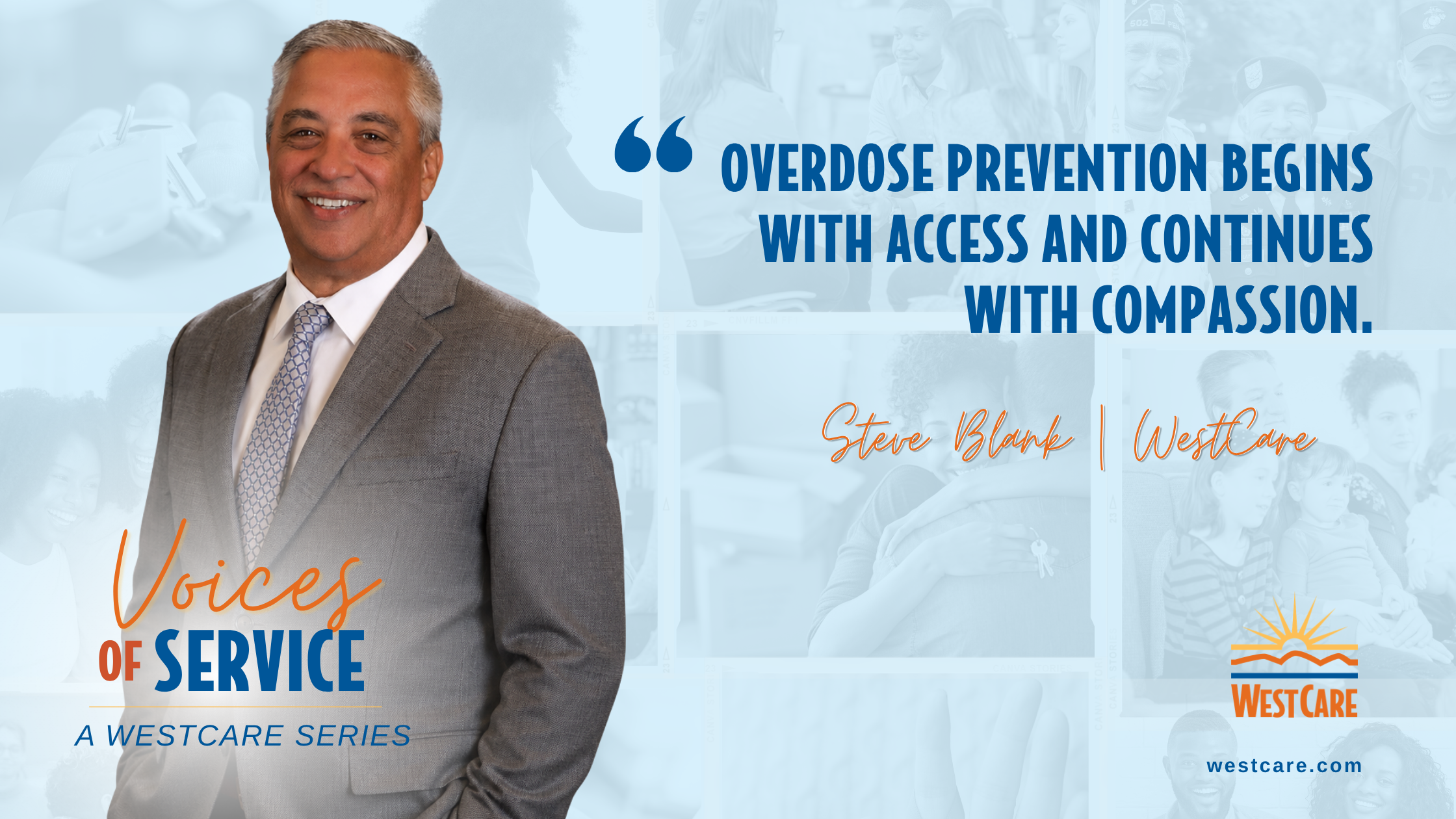
By Steve Blank
Every overdose leaves people asking what else could have been done.
Families ask it. Friends ask it. First responders ask it. Staff ask it too. The truth is that overdose prevention cannot depend on one moment, one program, or one person. It takes a connected system of care that makes help available before, during, and after crisis.
At WestCare GulfCoast-Florida, we serve people whose recovery needs are often complicated by homelessness, trauma, justice involvement, mental health concerns, and long periods of being disconnected from support. Many arrive tired. Some arrive scared. Some arrive because a hospital, court, shelter, family member, or outreach worker helped them take the next step.
That is why access matters. Treatment has to be available. Medication-assisted treatment and medications for opioid use disorder have to be part of the conversation. Peer support has to be present because people who have walked the road can often reach someone in a way others cannot. Housing matters because it is incredibly hard to focus on recovery when you do not know where you will sleep.
Programs like A Turning Point and the Mustard Seed Inn are not just service sites. They are places where people can be met with dignity at a time when shame may be telling them they are beyond help. Recovery housing beds, outpatient services, hospital peer services, and justice-involved supports all strengthen the same basic message: you are not alone, and there is a way forward.
Overdose awareness must include grief, but it should not stop at grief. It should push us to build faster handoffs from emergency rooms to treatment. It should push us to support families who are trying to understand what their loved one needs. It should push us to reduce stigma around medication, relapse, and asking for help.
I have heard people say they came to us with no home and no hope. I have also watched people rebuild. Not all at once. Not perfectly. But step by step, with staff who keep showing up and partners who understand that recovery takes more than a brochure and a good wish.
On Overdose Awareness Day, we remember those lost. We also recommit to the living. Access to treatment, housing, peer support, and compassion can save lives. We should make those doors easier to find and harder to close.