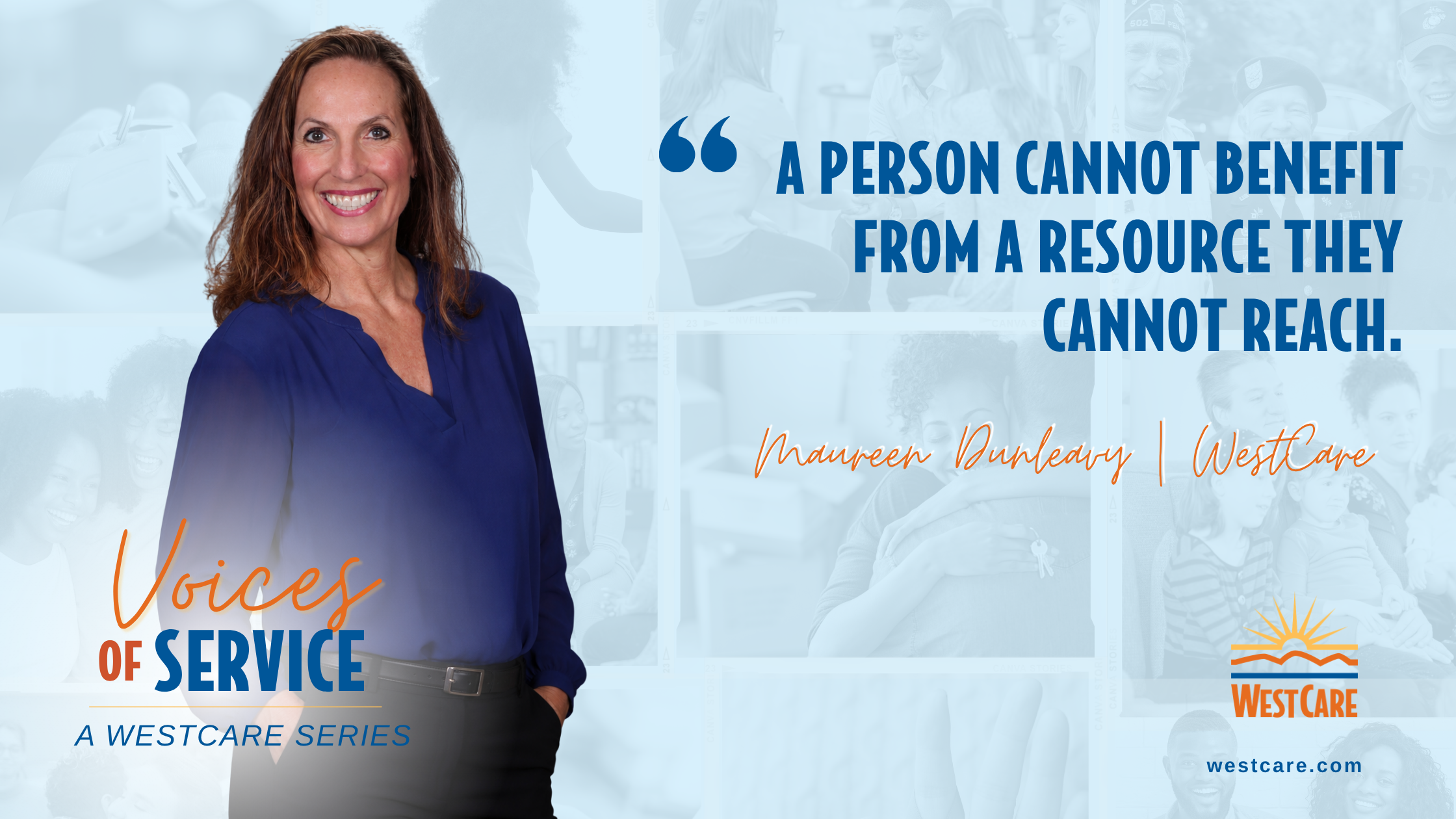
By Maureen Dunleavy, Regional Senior Vice President
For many people, the hardest part of getting help is not deciding they need it. It is getting there.
Transportation sounds simple until you listen to what people are really facing. A person may live miles from the nearest treatment provider. A parent may not have a car seat, gas money, or anyone to watch their children. A Veteran may be trying to get to an appointment from a rural area with no reliable public transportation. Someone leaving the hospital, jail, shelter, or crisis unit may have only a short window of motivation and no safe way to reach the next step.
In those moments, community-based care can be the difference between connection and another missed chance.
We often talk about access to care as though it begins at the front desk. In reality, access begins much earlier. It begins when a person hears about a service and knows who to call. It begins when agencies meet clients where they are literally and metaphorically.
That distance is not only physical. It can be emotional too. People who have been turned away, judged, or disappointed by systems may already feel unsure about trying again. When access becomes one more barrier, it can confirm the fear that help is out of reach.
Programs that are community-based provide services in the community and for the community. It is the best of customer service. Community-based care can include mobile crisis teams, outreach, warm handoffs, or providing care in the community. Community based care means services are co-located at other agencies, in client homes, telehealth, in schools, in local jails or with community partners. This is doing more than solving logistics. They are reducing the number of times a person has to start over. They are saying that we know getting here is not easy, and we are willing to help by coming to you.
In the Florida Keys, transportation and access barriers can be especially challenging because essential services, resources, and everyday needs may be separated by significant distances across multiple islands. For individuals trying to access behavioral health treatment, crisis services, medical appointments, or other supports that contribute to stability and well-being, community-based care can make an enormous difference. Guidance/Care Center reduces barriers through co-locating many of their behavioral health services in the community as well as providing telehealth services.
A person cannot benefit from an appointment they cannot reach. Improving access to behavioral healthcare requires us to look beyond the bricks and mortar of the office. We must also address the practical barriers that keep people from reaching those services. In communities like the Florida Keys, community-based care can determine whether someone receives help at the moment they are ready to accept it. We will come to you; we will meet you where you are at. When we remove that barrier, we create opportunities for recovery, stability, and hope. Sometimes the journey to healing begins with something as simple as the resource reaching you.