
By Diane Ludens, Vice President of Software Development
Refactoring as a Model for Thoughtful Improvement
Software developers use the term refactoring to describe a specific kind of progress: improving the internal structure of a system without changing what it delivers.
We preserve what works, remove unnecessary complexity, clarify logic, and strengthen the foundation so future enhancements are easier and safer to make. Good refactoring respects the value already present.
How WestCare’s Systems Evolved
That principle has guided my work at WestCare since I joined the organization as a software developer in 2004. Our earliest clinical software emerged as a practical solution to stacks of paper and repetitive data entry. As WestCare expanded, staff began asking how technology could reduce friction in their daily work. Each question revealed another opportunity to refine the system—not because it was failing, but because the people using it helped us understand what the next version needed.
Over time, I learned that systems built for people are never truly finished. They evolve through listening, learning, and adapting.
Human Growth Is Iterative, Too
WestCare’s mission is far more complex than any software platform. People are not code, and no one’s life should be treated as a problem to debug. Yet the principles behind refactoring mirror the work of recovery, healing, and personal growth.
Both begin by recognizing existing strengths. Both reject the idea that a difficult history makes the whole system—or the whole person—disposable. Both focus on removing barriers, reinforcing what works, and creating room for a better future.
Progress often happens one conversation, one kept appointment, one safer decision, one repaired relationship, or one new skill at a time. A setback does not erase the improvements that came before it. The goal is not to rewrite someone into a different person—it is to support them as they build stability, choice, and opportunity from the strengths they already carry.
Applying That Mindset to Artificial Intelligence
That same philosophy shapes how I believe organizations should approach artificial intelligence. Effective software development starts with the user and the problem—not the newest tool. AI should follow the same rule.
We are exploring AI to address real friction in our work: repetitive administrative tasks, time‑consuming searches, inconsistent handoffs, and other burdens that compete with direct service. Our goals are practical and measurable: faster access to information, more consistent workflows, reduced administrative load, and more time returned to staff doing mission‑critical work.
Success is not defined by how much AI we deploy. It is defined by what becomes possible because we used it well.
Protecting the Human Moments That Matter
Behavioral health and human services rely on critical human touchpoints.
An intake worker hears the concern behind a first question. A clinician notices what someone is not yet ready to say. A case manager follows up instead of letting a referral disappear. A peer offers hope grounded in lived experience. A supervisor helps a staff member recover after a difficult day.
These moments require attention, judgment, empathy, and trust. They are not inefficiencies to automate away.
The right use of AI reduces the work surrounding those moments so more of them can occur. It can organize information, prepare a starting draft, surface relevant knowledge, or streamline repetitive steps. But it should never become the relationship.
AI should support the touchpoint, not replace the person within it.
That is why WestCare approaches AI through the TOUCH framework: Transparent, Outcome-guided, User-centered, Compassionate, and Human-led.
- Transparent means staff and the people we serve should understand when AI is involved, what information it uses, and what it can and cannot do.
- Outcome-guided means we measure success by meaningful results, such as better service, reduced burden, greater access, stronger quality, and preserved trust. Simply using more AI is not an outcome.
- User-centered means tools are developed with the people who will rely on them. Frontline staff understand the practical realities, pressures, and exceptions that cannot always be seen from a project plan.
- Compassionate means language and workflows must protect dignity. In behavioral health, words can heal or harm. Technology should support trauma-informed, respectful, and non-stigmatizing care.
- Human-led means people retain judgment, approval, responsibility, and accountability. AI may suggest, summarize, organize, or draft. Humans decide.
In software terms, these are not slogans. They are design requirements and acceptance criteria. A tool is not ready simply because it can produce an answer. It has to fit the workflow, protect trust, serve a meaningful outcome, and leave responsibility with people.
Some of the best refactoring is invisible to the person using the software. They may never see the cleaner code or improved architecture. They simply notice that the system is faster, clearer, and more dependable.
Responsible AI should work the same way.
The people WestCare serves should not have to think about the technology operating behind the scenes. They should feel that information is easier to find, staff are less rushed, handoffs are warmer, and help is more accessible.
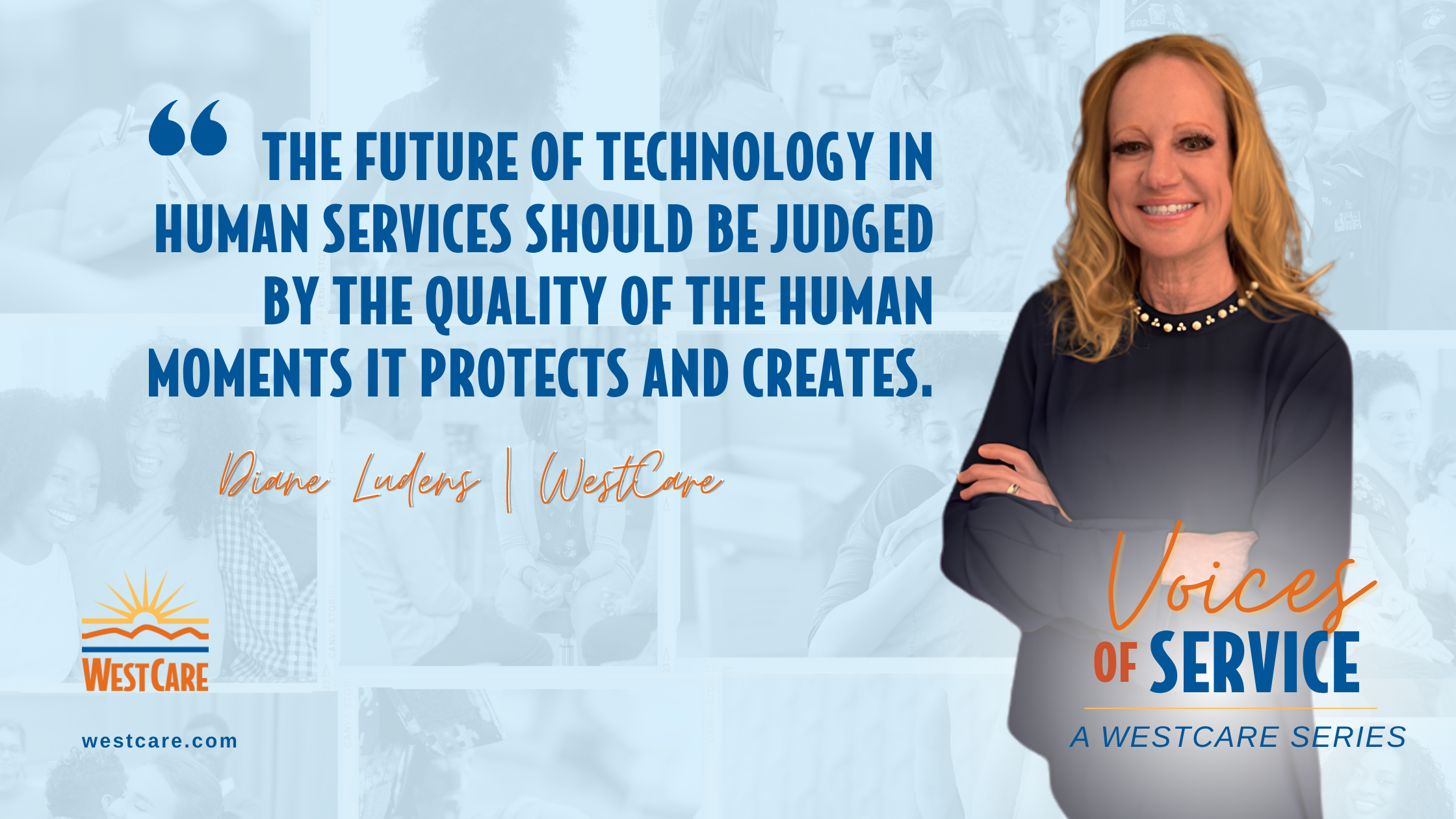
I believe the future of technology in human services should be judged by the quality of the human moments it protects and creates.
Invisible Improvements, Visible Impact
Some of the best refactoring is invisible to the end user. They may never see the cleaner architecture or improved logic. They simply experience a system that is faster, clearer, and more dependable.
Responsible AI should feel the same.
The people we serve should not have to think about the technology operating behind the scenes. They should feel that information is easier to find, staff are less rushed, handoffs are warmer, and help is more accessible.
A Future Built on Human Connection
The future of technology in human services should be judged by the quality of the human moments it protects and creates. At its best, AI does not reduce touch it makes room for more of it.
That is a future worth building the same way strong software is built: thoughtfully, collaboratively, and one responsible improvement at a time.
![Read more about the article National Coloring Day Coloring Pages [DOWNLOAD]](https://westcare.com/wp-content/uploads/2023/11/pexels-mentatdgt-1078744-300x200.jpg)