
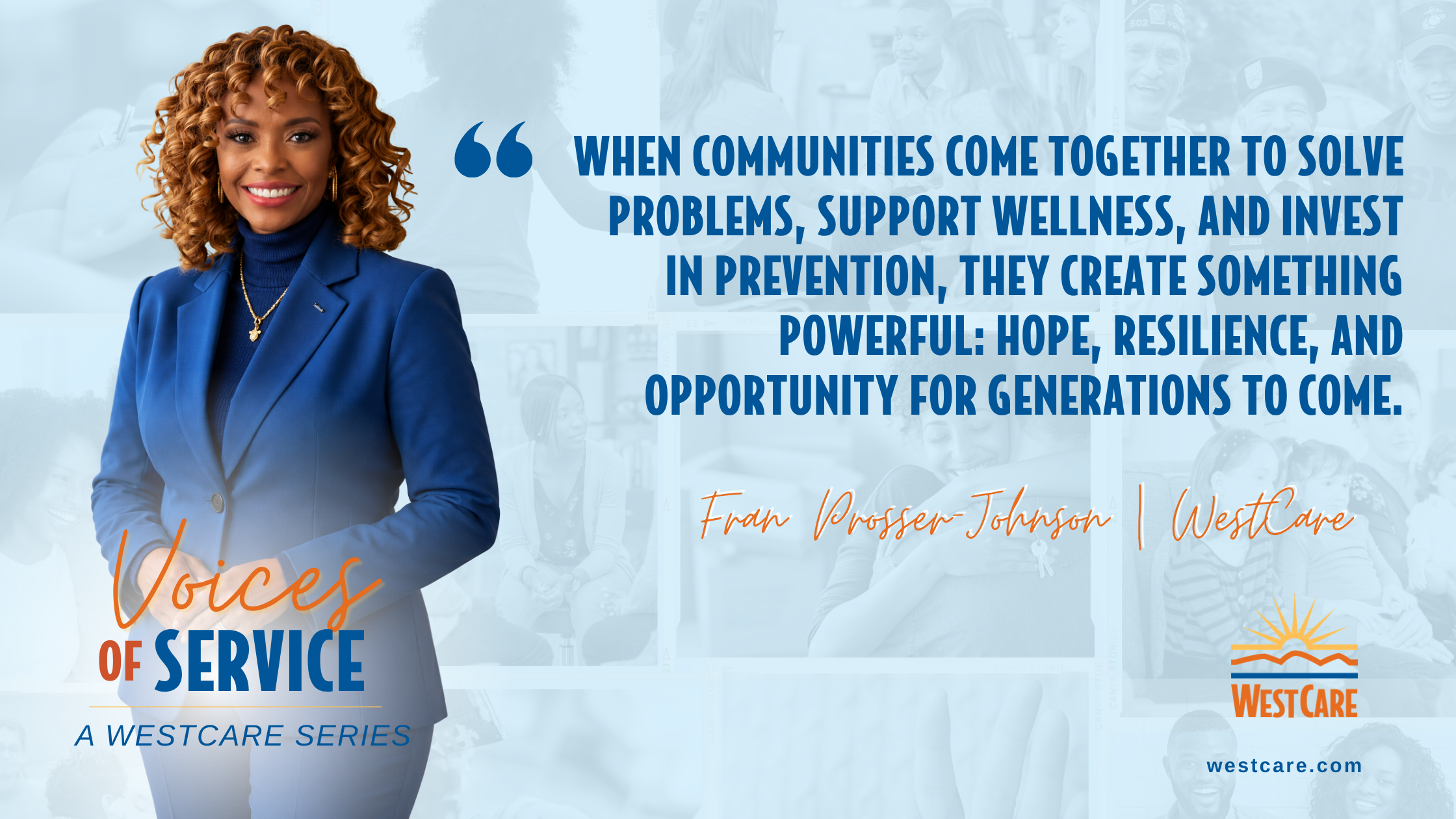
By Francine Prosser-Johnson, Regional Vice President, WestCare Texas
People often turn first to the person they trust most.
For many families, that person is not a clinician, case manager, or government agency representative. It may be a teacher, coach, pastor, neighbor, community volunteer, or another trusted presence who has earned credibility through relationships and consistency.
That reality reveals an important truth about prevention: communities are often the first line of support.
When challenges such as substance use, mental health concerns, violence, housing instability, or family stress emerge, the solutions rarely come from a single program or organization. Lasting change happens when people, organizations, and local leaders are connected, informed, and equipped to work together.
This is the heart of community-building.
Strong communities are able to identify challenges, mobilize resources, and create solutions that improve quality of life. Those strengths develop through collaboration, shared responsibility, and a commitment to creating conditions where individuals and families can thrive.
Prevention work depends on that foundation.
Whether the goal is to improve mental well-being, reduce substance use, support young people, decrease violence, or help families remain stable, prevention is most effective when communities are engaged long before a crisis occurs. Strong networks create opportunities for early intervention, reduce isolation, increase awareness, and connect people to support before challenges become emergencies.
Across Texas, community organizations, schools, healthcare providers, faith communities, businesses, residents, and public agencies are working together to strengthen those connections. Their efforts take many forms, from youth development programs and parenting supports to mental health education, recovery services, violence prevention initiatives, housing assistance, and neighborhood partnerships.
At WestCare Texas – Ella Austin, we are proud to be part of that work. Our role is not simply to deliver services, but to partner with communities to identify needs, support local leadership, and help expand opportunities for individuals and families. We have seen firsthand that sustainable progress occurs when people come together around a shared vision for healthier, safer, and more resilient communities.
This perspective is especially relevant during Domestic Violence Awareness Month and Substance Use Prevention Month. While these observances highlight specific issues, they also remind us of a broader responsibility: creating communities where people feel connected, supported, and empowered to seek help when they need it.
Community-building is not a single initiative or program. It is an ongoing investment in people, relationships, and collaborative problem-solving. It recognizes that every community already possesses strengths and that meaningful change occurs when those strengths are supported and expanded.
When communities have the tools, partnerships, and commitment to address challenges together, prevention becomes more than a service. It becomes a shared responsibility.
And that shared responsibility creates something every community needs: resilience, hope, and opportunities for future generations.


