
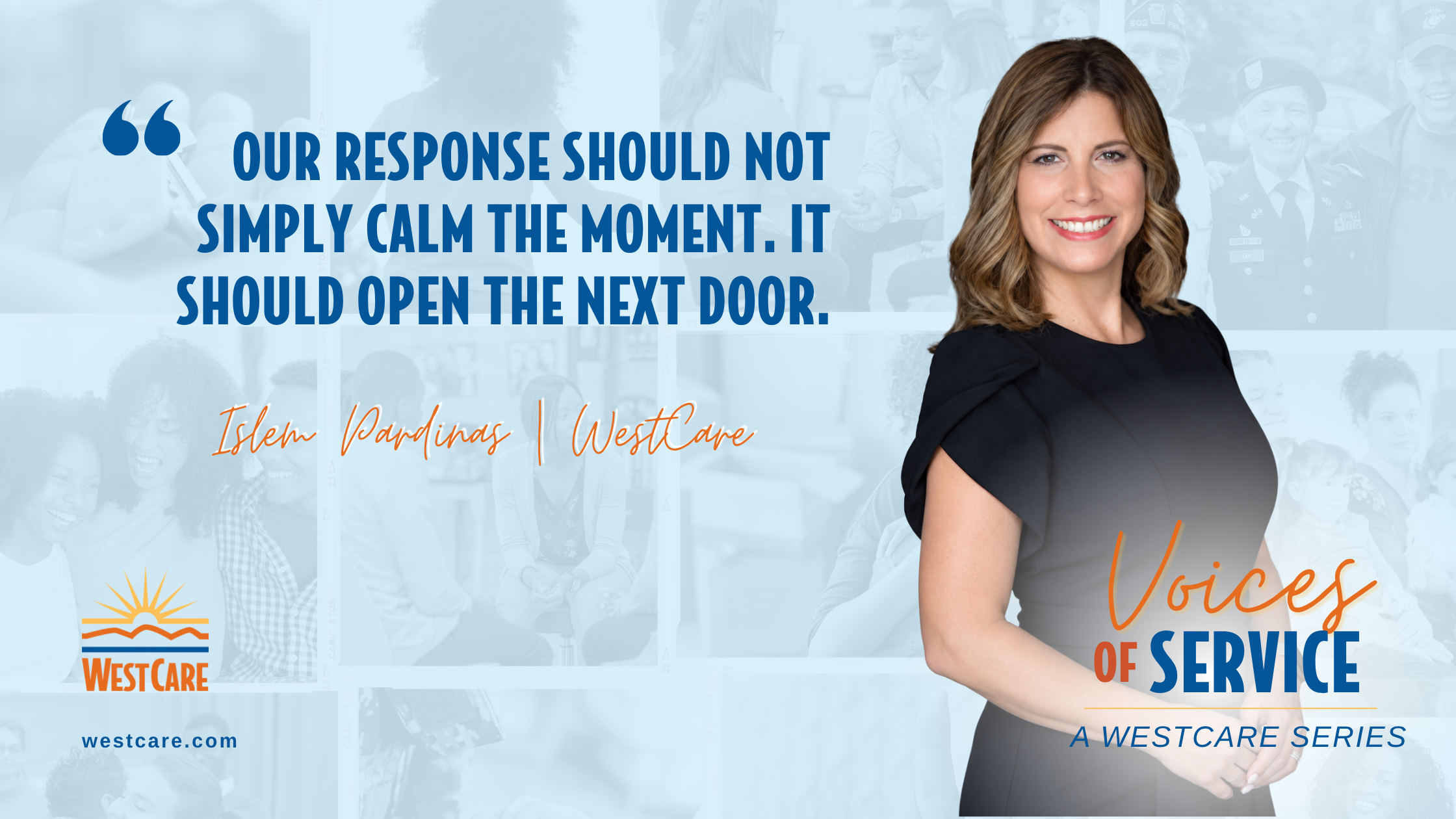
By Islem Pardinas. Regional Vice President of Operations, The Village South, Miami-Dade County
When a family is in crisis, time feels different.
Minutes can feel like hours when a parent is afraid their child may hurt themselves. A night can feel endless when someone is trying to leave an unsafe situation. A phone call can feel overwhelming when a person does not know where to turn or what to do next. That is why response time matters. But I believe how we respond matters just as much. It is not enough to get to a family quickly. Crisis response is about meeting people where they are and helping them feel safe enough to take the next step.
At The Village South, we serve children, adults, and families through residential treatment, outpatient and in-home therapy, medication-assisted treatment, crisis response, early childhood education, prevention, life skills, employment support, jail diversion, and child welfare case management. These services may look different on paper, but families rarely experience their lives in separate categories. Their needs are connected.
A family may come to us because of a behavioral health crisis, but that crisis may also involve housing instability, domestic violence, parenting challenges, substance use, or child welfare involvement. What they often need most is someone who will listen and help them understand what comes next. That begins with compassion. I believe every person has a story to tell and that I can learn something from every person I encounter—regardless of who they are or the circumstances that brought them to us. So I listen. I listen with my eyes, my ears, and my heart. I try to understand them.
We all know that people are more than their worst moment, their diagnosis, their behavior, or the crisis that brought them to our door. Everyone is carrying something, even when we cannot see it. In this work, we have to be willing to put ourselves in another person’s shoes and understand what they may be feeling, fearing, and experiencing.
This is especially important for survivors of domestic violence. They may be weighing safety, housing, finances, children, and fear all at once. The response they receive from us can influence whether they feel safe enough to ask for help again.
The same is true in child welfare. Families may already feel overwhelmed or afraid of what will happen next. Our role is not simply to provide a service, but to create connection, stability, and a path forward.
Mobile crisis response is important because crisis does not always happen in an office or during business hours. It happens at home, at school, in the community, and sometimes in the middle of the night. Getting there quickly matters. But once we arrive, we have to listen, respect the person in front of us, and connect them to what they need after the immediate crisis has passed.
Our response should not simply calm the moment. It should open the next door.
Families may not remember every service we provided. But they will remember how we treated them when they were scared. They will remember whether someone answered, whether someone listened, and whether they were treated with dignity.
That is why every response matters—not just how quickly we get there, but how we make people feel when we do.